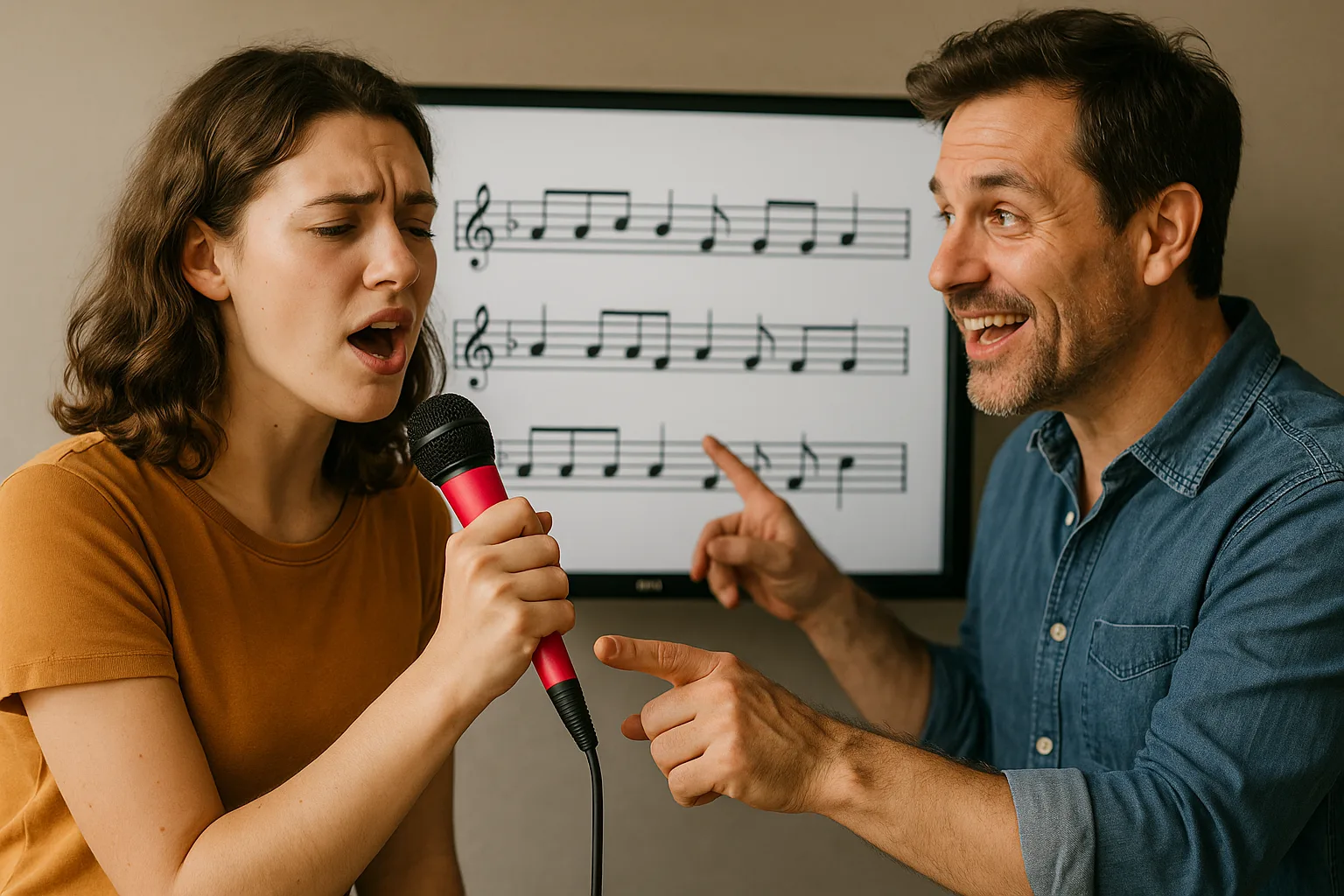
Vocal Mastery from Vladivostok: Techniques, Online Lessons, and Practice Tips for Singers at Every Level
Introduction
Whether you’re warming up before a gig near the Golden Horn Bay or taking lessons at home with the Pacific visible from your window, vocal development blends *technique*, *expression*, and *consistent practice*. This guide brings practical breathing, articulation, performance-preparation, and emotional-development tips for beginners and experienced singers in Vladivostok — with focused advice for effective online singing lessons.
Why online lessons work for Vladivostok singers
— Flexibility with tutors across Russia and the world (useful for late evenings or early mornings).
— Recordings of lessons allow review after rehearsals or performances.
— Access to specialized teachers (classical, pop, jazz, musical theatre) without relocating.
— Practical for balancing rehearsals, university or work schedules common in Vladivostok.
Foundations for beginners
— Posture: Stand tall with feet hip-width, knees soft, ribcage neutral. Good posture supports breathing and resonance.
— Diaphragmatic breathing: Breathe low into the belly (not shallow into the shoulders). Practice 4-4-6: inhale 4, hold 4, exhale 6.
— Warm-ups (5–10 minutes):
— Lip trills or tongue trills down and up a 5-note scale.
— Humming on a comfortable pitch, gliding up and down.
— Sirens from chest to head voice (easy, flexible slides).
— Pitch and ear training: Sing and match a piano or app reference; practice simple scales and intervals.
— Basic repertoire: Choose short songs that sit comfortably in your range; focus on phrasing and clear vowels.
Techniques for experienced singers
— Breath management: Work on appoggio — sustaining consistent airflow and gradual release for long phrases.
— Registration and mix: Practice bridging chest and head using slides and octave jumps; use semi-occluded vocal tract exercises (straw phonation) to balance registration.
— Resonance tuning: Adjust vowel shapes and larynx height to optimize tone and projection without strain.
— Advanced exercises:
— Messa di voce (controlled crescendo-decrescendo on a sustained note).
— Rapid staccato scales for agility.
— Arpeggio jumps with controlled placement to maintain tone across registers.
— Stylistic authenticity: Study idiomatic ornamentation and phrasing for your genre (jazz scat, classical appoggiatura, pop melisma).
Articulation and diction
— Jaw and tongue release: Gentle massage and jaw drops before singing; practice exaggerated consonants slowly.
— Consonant clarity: Work on final consonants in phrases without choking the vowel.
— Vowel modification: Slightly narrow or brighten vowels in higher ranges to maintain resonance.
— Exercises:
— Speak-sing phrases with deliberate consonants, then sing them retaining clarity.
— Fast-tongue twisters to improve agility: start slow, increase speed, keep articulation clean.
Performance preparation
— Repertoire selection: Match songs to your current vocal health and strengths; avoid pushing extremes before a show.
— Warm-up routine (20–30 minutes): start with easy hums/lip trills → scales → repertoire run-throughs → stage run-through.
— Mic technique (for amplified gigs and online performances):
— Keep consistent distance (10–15 cm) and angle; back off slightly on loud passages.
— Practice moving to mic for softer lines and stepping back for louder moments.
— Stage presence and blocking: rehearse movement while singing; plan breaths and phrase transitions.
— Managing nerves:
— Progressive muscle relaxation and diaphragmatic breath cycles before going on.
— Run a shortened pre-show ritual for consistency.
— Recording and review: Video-record performances to evaluate posture, phrasing, and emotional connection.
Emotional development using the voice
— Text work: Analyze lyrics — literal meaning, subtext, emotion arc. Mark breaths and emotional beats in the score.
— Imagery and sensory recall: Use specific images or sensory cues to color phrases (e.g., textures, colors, small actions).
— Substitution and intention: Replace abstract emotions with concrete intentions (e.g., “convince this crowd I’m telling a private story”).
— Safe emotional recall: Use short, controlled memories rather than deep trauma; stop if it becomes overwhelming.
— Expressive exercises: Sing a single line with five different emotions (joyful, sad, sarcastic, tender, defiant) to build versatility.
Online lesson best practices (technical + teaching choices)
— Tech setup:
— Microphone: USB condenser or dynamic mic (e.g., cardioid) gives clearer sound than laptop mic.
— Headphones: Closed-back for latency-free monitoring.
— Internet: Wired connection or strong Wi‑Fi; aim for stable upload speed (>5 Mbps if possible).
— Camera angle: Eye-level, good lighting, uncluttered background.
— Latency workarounds: For real-time singing together, use low-latency platforms (or record parts separately). Many teachers use play-along solutions (teacher hears, student records).
— Choosing a teacher:
— Look for demonstrated teaching experience and styles that match your goals.
— Ask for a trial lesson and for recordings of past students/performances.
— Check how they structure practice, give homework, and use video/audio feedback.
— Lesson etiquette: Warm up before the lesson, have scores and tracks ready, record the session (with permission).
Weekly practice plan (example)
— Daily (30–60 min):
— 5 min posture/breathing
— 10–15 min warm-ups (lip trills, scales, sirens)
— 10–20 min focused technique (mix, runs, resonance)
— 10–15 min repertoire and performance work (lyrics, stage moves)
— Twice per week:
— Record and review a full song; note 3 things to improve.
— Once per week:
— Work on emotional storytelling and phrasing with coaching or self-study.
— Rest days: Take at least one partial rest day for vocal recovery.
Local considerations for Vladivostok singers
— Climate and vocal health: Cold, dry winds can irritate the throat. Use humidifiers at home in winter and stay hydrated.
— Community: Seek out choirs, student theater groups, and local cafés for open