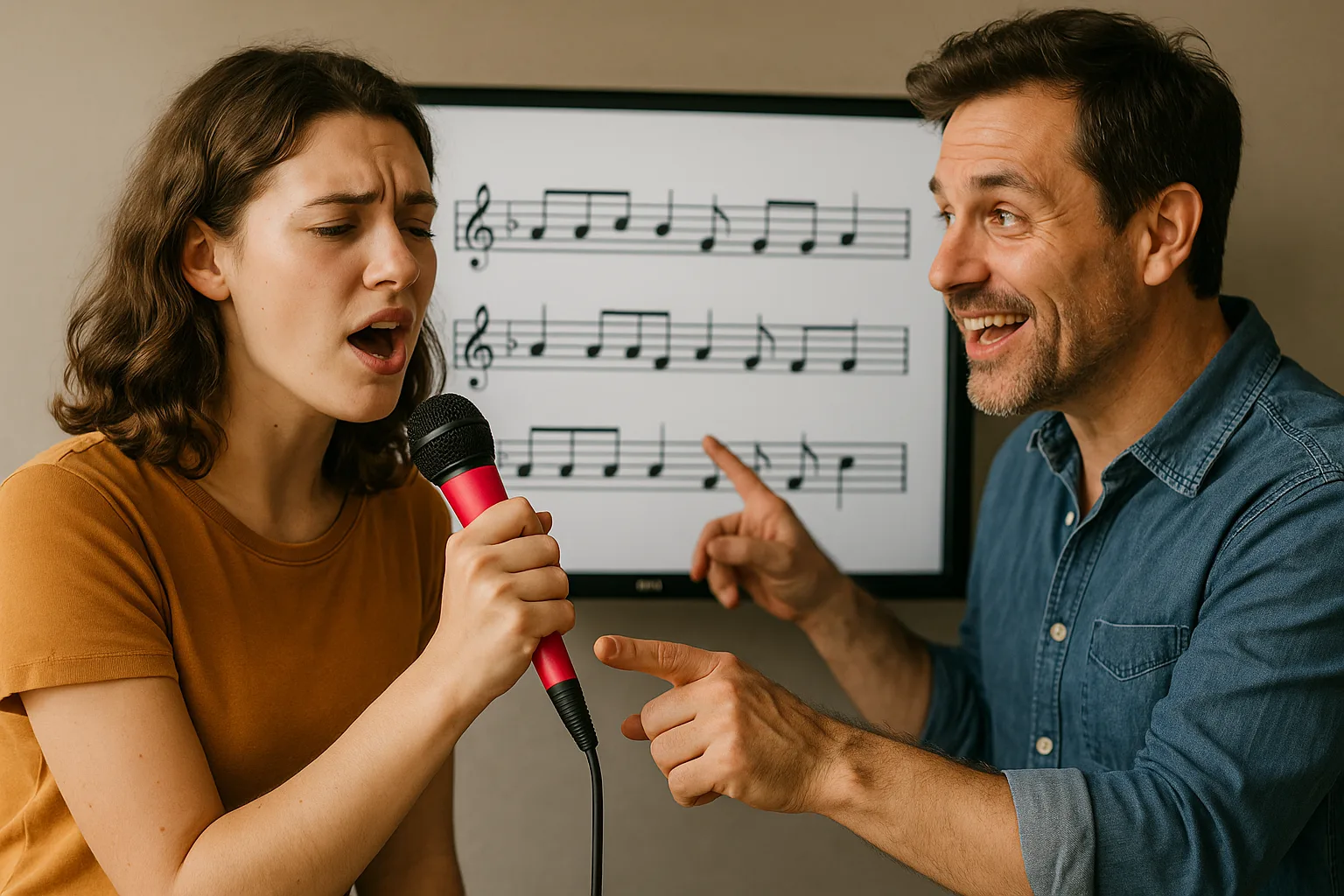
Master Your Voice in Vladivostok: Practical Vocal Techniques, Online Singing Lessons, and Tips for Beginners and Pros
Introduction
Whether you’re a beginner taking your first breath into singing or an experienced vocalist refining your craft, Vladivostok’s vibrant cultural scene and the rise of online coaching make this an excellent time to develop your voice. This guide gives clear, practical techniques—breathing, articulation, performance prep, emotional development—and actionable tips for getting the most from online singing lessons.
Why online singing lessons work for Vladivostok singers
— Flexibility across time zones and schedules; useful for students, shift workers, and touring musicians.
— Access to specialized teachers beyond the local scene—useful in a regional center like Vladivostok.
— Easy to record lessons and review feedback to accelerate progress.
— Combine local rehearsal spaces and online coaching for best results.
Breathing: The foundation
— Focus: *diaphragmatic breathing* (low, controlled, efficient).
— Basic exercise (5–10 minutes daily):
1. Sit or stand tall with relaxed shoulders.
2. Inhale 4 counts expanding the ribcage and lower abdomen.
3. Hold 1–2 counts.
4. Exhale 6–8 counts steadily with controlled support (use a hiss «sss» or gentle «sh»).
— Progressive control: work to lengthen exhale and maintain steady pressure using a metronome.
— Advanced: practice sostenuto phrases—sing a long phrase on a single breath and aim for consistent tone and even dynamic control.
Articulation, resonance, and vocal placement
— Articulation drills:
— Tongue twisters (in Russian for local relevance): «Шла Саша по шоссе и сосала сушку» and «Карл у Клары украл кораллы» — start slow, increase clarity and tempo.
— Consonant drills: repeat plosives (pa, ta, ka) and fricatives (sa, sha) focusing on clarity without tension.
— Resonance and placement:
— Hum-lip trill-sirens: start with gentle hums and slide through registers to feel forward resonance in mask and nasal bones.
— Straw phonation: sing through a straw for balanced airflow and ease on the folds.
— Tip: shape vowels for consistency across registers—work on open, rounded, and neutral vowel shapes.
Practical warm-up routine (10–15 minutes)
1. Body release and posture (1–2 min): roll shoulders, neck, jaw.
2. Breathing exercises (2–3 min): diaphragmatic control 4–8 counts.
3. Humming and lip trills (2–3 min): slide through comfortable range.
4. Scales on vowels (3–5 min): 5-note and octave patterns on «ah/ee/o».
5. Articulation/tongue twisters (2 min).
Tips for beginners
— Start simple: learn breath control, posture, and a short warm-up routine.
— Prioritize consistency: 15–30 minutes daily beats a long weekend session.
— Choose repertoire that fits your current range—avoid straining to hit extremes.
— Record yourself weekly to track progress and spot pitch or timing issues.
— Work with a teacher to establish healthy technique early.
Tips for experienced singers
— Focus on nuance: dynamics, phrasing, and text delivery.
— Expand agility with melisma and interval training; practice controlled runs slowly then speed up.
— Work on mix and register transitions using sirens, arpeggios, and narrow-vowel exercises.
— Use repertoire to stretch stylistically—jazz, folk, or contemporary pieces can reveal technical gaps.
— Consider mic technique and in-ear monitoring for live and studio work.
Performance preparation
— Rehearsal plan: 2–3 full run-throughs of a set, plus focused work on trouble spots.
— Stage routine: warm-up in a quiet space 30–60 minutes before performance; do short vocal exercises 10–15 minutes before going on.
— Mic technique: maintain consistent distance (10–15 cm typical), control proximity effect for low notes, and learn to angle for dynamics.
— Mental prep: visualization, breathing, and a short ritual (a song phrase, a power posture).
— Managing nerves: channel energy into breath and purposeful movement; practice mock performances with friends or video.
Emotional development through voice
— Voice as storytelling: connect with lyrics—identify the emotional arc and backstory of each song.
— Somatic awareness: use breath and body scans to locate tension and emotional blocks.
— Expressive exercises:
— Sing a neutral phrase with different emotions (anger, joy, sadness) to learn vocal coloring.
— Free improvisation sessions to explore authenticity without judgment.
— Journaling: after each practice, note emotional responses, breakthroughs, and obstacles to build intentional growth.
— Work with a coach or therapist for deeper emotional work if needed—this is common for performers processing stage anxiety or trauma.
Making the most of online singing lessons
— Tech setup:
— Stable internet (wired if possible), decent external mic or headset, and a quiet, reflective space.
— Use Zoom, Skype, or a platform your teacher prefers; record lessons for review.
— Lesson structure (typical 45–60 min):
1. Check-in and warm-up (10–15 min).
2. Technique focus (15–20 min).
3. Repertoire coaching and interpretation (15–20 min).
4. Homework and goals (5 min).
— Homework discipline: set small, measurable weekly goals and submit recordings between lessons.


Вам также может понравиться

Нос как тихий дирижёр

Зазвучать в тишине: как преодолеть страх перед сценой