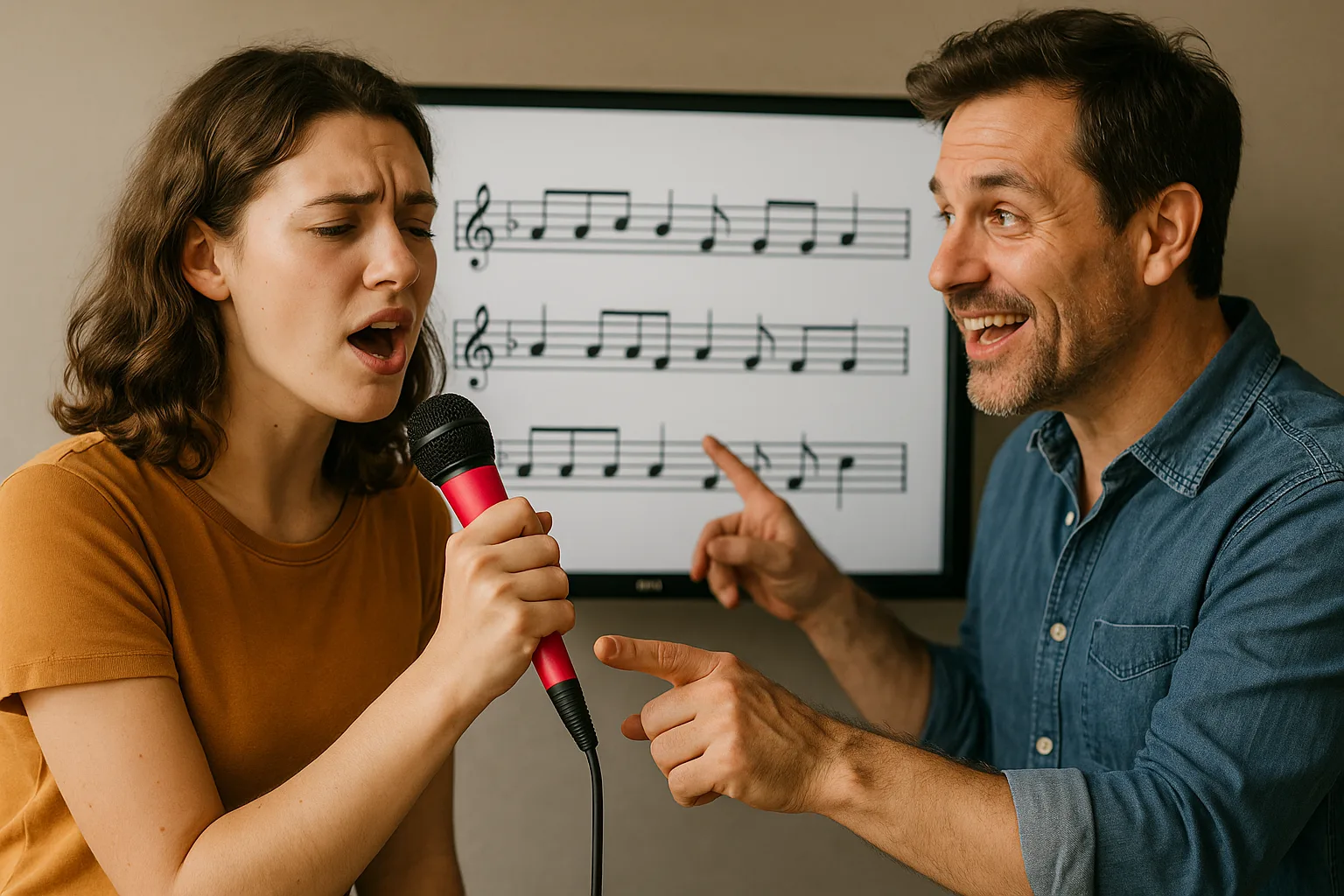
Voice on the Pacific Edge: Practical Vocal Techniques and Lesson Tips for Singers in Vladivostok
Вокал у Приморья: как развивать голос в Владивостоке — от дыхания до эмоций
Whether you’re a beginner taking your first online lesson or an experienced singer preparing for a local stage, vocal development is a combination of reliable technique, deliberate practice, good habits, and emotional honesty. Below are concrete, practical tips focused on vocal techniques, online singing lessons, breathing and articulation, performance preparation, and using voice as an emotional instrument — with small additions for life in Vladivostok’s coastal climate and local scene.
Quick roadmap
— Fundamentals: breathing, support, resonance, articulation
— Exercises: starter routines for beginners and progressions for advanced singers
— Online lessons: tech, lesson format, how to get the most out of remote coaching
— Performance prep: physical, musical and psychological readiness
— Emotional development: storytelling, connection, improvisation
— Local considerations: climate, venues, community practice tips
—
1. Core vocal techniques (what to practice every day)
Practice these every session to build reliability.
— Breathing and support
— Diaphragmatic breath: inhale gently expanding lower ribs and belly, not shoulders. Exhale on a steady hiss or sustained tone.
— Appoggio concept: lift lower ribs on inhalation and maintain a controlled, steady breath pressure while singing.
— Simple drill: inhale 4 — hold 2 — exhale on a hiss for 6–8 counts. Progress to singing a five-note scale on a single breath.
— Resonance and placement
— Focus on forward placement (mask resonance): sensations in cheekbones, nose and forehead produce clearer, freer tone.
— Experiment with vowel placement — keep vowels clear and slightly forward for projection.
— Registers and mix
— Know chest, head, and mixed voice. Smooth the passaggio with gentle sirens and octave glides.
— Do sirens from low to high on “ng” or “oo” to blend registers.
— Articulation and diction
— Warm up consonants with lip trills and tongue trills to loosen articulators.
— Practice tongue-twisters slowly, then speed up: in Russian — «На дворе трава, на траве дрова»; in English — “red leather, yellow leather.”
— Dynamics and phrasing
— Practice crescendos/decrescendos across sustained notes to gain control of intensity.
— Work on legato vs staccato lines for expressive contrast.
—
2. Daily warm-up routines (starter plans)
Two sample routines — pick one depending on time.
— 15-minute beginner warm-up
1. Gentle hum on comfortable pitch, 1–2 minutes
2. Diaphragmatic breathing drill: 4–6 cycles
3. Lip trills on a five-note scale, 3 sets
4. Five ascending/descending vowels (ah, eh, ee, oh, oo) on scales, 5 minutes
5. Two simple songs or phrases at comfortable range
— 30–45 minute intermediate/advanced warm-up
1. Humming + sirens across full range, 3 minutes
2. Breath control: 4–4–8 cycles, then sing sustained phrases on one breath
3. Mixed-voice exercises: arpeggios crossing passaggio, 10 minutes
4. Articulation: fast scales with consonant attacks (t, d, k), 5 minutes
5. Repertoire runs: three focused repetitions of difficult passages with dynamic changes
—
3. Exercises by level
— Beginners
— Lip trills and humming for relaxation and airflow
— Short, slow scales within comfortable range
— Simple breathing exercises standing and lying down
— Experienced singers
— Vowel modification across passaggio
— Intervallic agility (thirds, sevenths, diminished intervals)
— Stylistic ornamentation, phrase shaping, dynamic layering
— Recording and critical listening to refine tone and intonation
—
4. Online singing lessons: make remote work for you
Remote lessons can be as effective as in-person lessons if you set them up right.
— Tech and environment
— Microphone: a USB condenser or dynamic mic (SM58-style) for clarity.
— Headphones to avoid feedback; teacher hears backing track or you can stream via tools like Jamulus, Soundtrap, or Zoom with stereo and original sound enabled.
— Stable internet (wired if possible), quiet room, good lighting and camera at chest level.
— Record lessons (with permission) and review. Keep files organized.
— Choosing a teacher
— Look for a teacher with a clear track record: video demonstrations, student recordings, structured curricula.
— Ask about their approach to technique, repertoire, and audition/performance coaching.
— Getting the most from lessons
— Warm up before session so teacher can work on problem areas.
— Bring recording of yourself, a short warm-up, and specific goals each lesson.
— Request targeted homework: exact exercises, tempo, target number of repetitions.
—
5. Performance preparation (from rehearsal to stage)
— Create a rehearsal plan
— Chunk songs into problem areas; rehearse these slowly then in tempo.
— Do