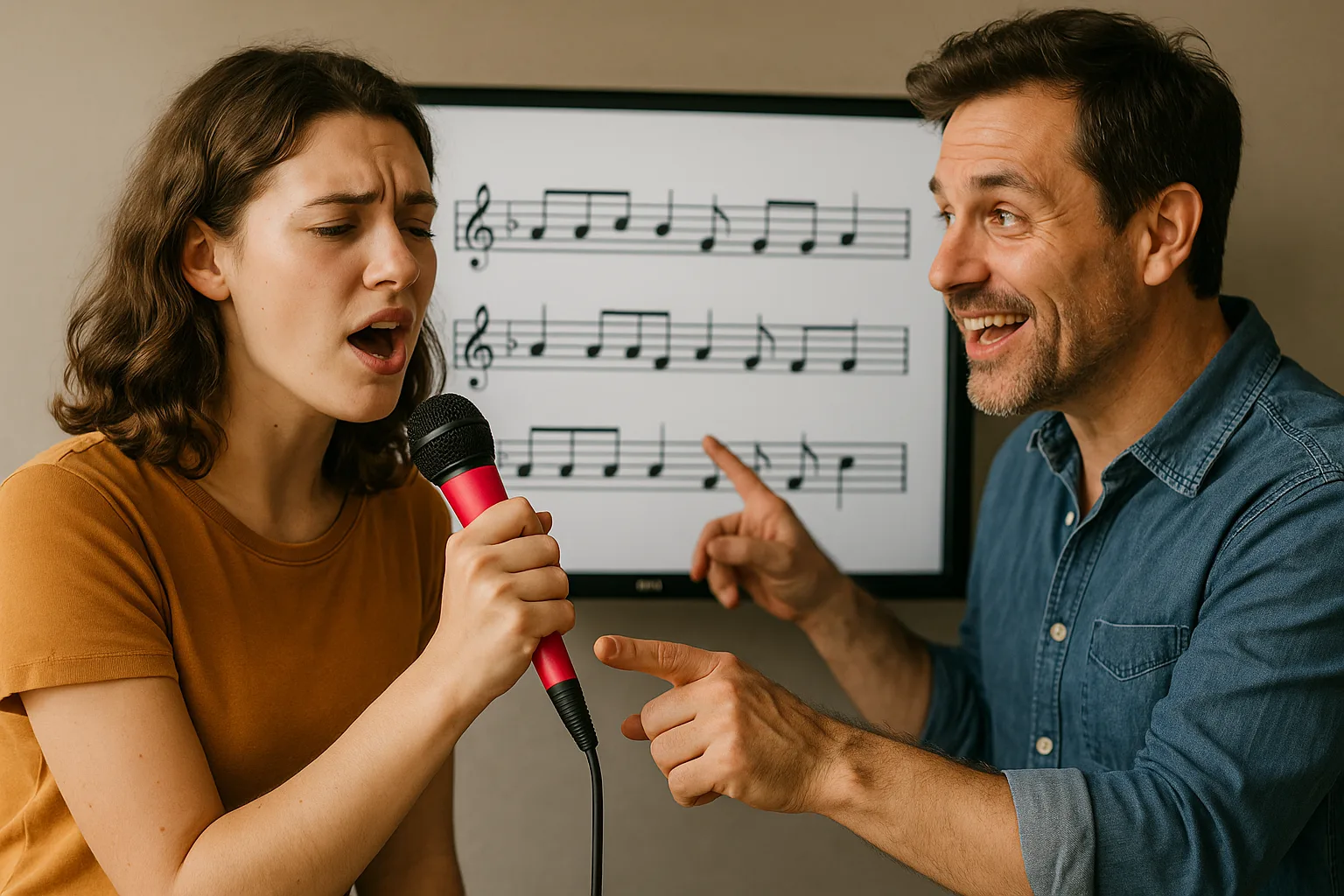
Voice in the Far East: Practical Vocal Techniques and Online Singing Lessons for Vladivostok Singers
Introduction
Whether you’re a beginner in the music cafés of Vladivostok or an experienced vocalist preparing for a concert on a local stage, strong technique, reliable practice habits, and emotional depth make the difference. This guide brings together vocal techniques, online lesson tips, breathing and articulation drills, performance preparation, and exercises for emotional development—adapted to the realities of singing from Vladivostok.
Why online singing lessons work for Vladivostok residents
— Accessibility: reach expert teachers across Russia, Asia-Pacific, and beyond without travel.
— Flexible scheduling to suit your UTC+10 time zone.
— Recordable lessons: review teacher feedback and progress at your own pace.
— Combine local stage opportunities (cafés, festivals, university concerts) with global instruction.
*Local tip:* In Vladivostok’s cold, dry months use humidifiers and schedule lessons when your voice is naturally warmed (avoid early-morning lessons immediately after getting up).
Core vocal techniques (what every singer needs)
— Breath support: low-diaphragm engagement and steady exhalation.
— Resonance: use chest, mask (face), and head spaces for timbre variety without forcing.
— Registration: smooth transitions between chest and head voice (mix voice).
— Articulation: clarity without tension—place consonants with relaxed jaw and tongue.
— Dynamics and phrasing: control volume and shape musical sentences to convey emotion.
Breathing exercises (simple, daily)
1. Diaphragm awareness (5 minutes)
— Lie on your back with a book on your abdomen. Breathe so the book rises on inhale and lowers on exhale.
2. 4-4-8 exercise (5–8 minutes)
— Inhale 4 counts, hold 4 counts, exhale on a steady 8 counts while on “sss” or a gentle hum.
3. Controlled exhale (5 minutes)
— Take a comfortable inhale, sing a sustained note on “ah” while releasing air steadily for as long as comfortable. Track improvements weekly.
Articulation drills (daily, 5–10 minutes)
— Lip trills and tongue trills for flexibility and forward placement.
— Consonant clusters: speak-sing phrases focusing on crisp but relaxed “t”, “d”, “k”, “g”.
— Vowel shaping: sing phrases on pure vowels (ah, eh, ee, oh, oo) moving smoothly between them.
Warm-up routine (15–20 minutes)
1. Gentle hums and sirens (2–3 minutes) — connect breath to sound.
2. Lip/tongue trills across comfortable range (3–4 minutes).
3. Five-note scales on vowels, slowly increasing range (5 minutes).
4. Staccato on shorter scales for articulation and coordination (3–4 minutes).
5. Song-specific phrase practice at the end (3–4 minutes) — short sections of repertoire.
Practice plan: Beginners vs. Experienced
— Beginners (30–45 min/day, 4–6 days/week)
— 10 min breathing + warm-up
— 10–15 min technique (vowels, mixed voice introduction)
— 10–15 min repertoire (short songs, focus on pitch and clear vowels)
— Experienced (60+ min/day, 5–7 days/week)
— 15 min breathing + full warm-up
— 20–30 min targeted technique (range extension, agility, stylistic work)
— 20–30 min repertoire (performance practice, dynamic shaping, stylistic nuance)
— 10–15 min recording and self-review
Performance preparation (practical checklist)
— Repertoire: pick 4–6 songs you know well; one or two show your strengths.
— Backing tracks/arrangements: prepare high-quality tracks or live accompanist cues.
— Microphone and soundcheck: if using PA, rehearse mic technique (distance, angle).
— Staging: practice movement and staging in the space; block entrances/exits.
— Recording run-through: record a full-length mock performance and watch it with objective notes.
— Physical/mental warm-up: brief breathing and lip trill routine just before you go on.
— Local logistics: check travel time, load-in for instruments, and venue tech rules (especially at smaller Vladivostok venues).
Emotional development through voice
— Story first: identify the emotional journey of each song. Mark the climax and subtext.
— Personal connection: relate lyrics to a personal memory or imagined scene to create truthful expression.
— Dynamic mapping: chart where you want to intensify or soften emotionally—and practice those shifts.
— Acting basics: small gestures, eye contact, and breath-linked timing build convincing performances.
— Mental rehearsal: visualize performing the song successfully, including audience reaction, to reduce anxiety.
Online lessons: tech, etiquette, and getting the most out of sessions
— Tech essentials:
— Stable internet (wired when possible).
— Camera at eye level, good lighting, quiet room.
— USB condenser mic or good headset for clearer sound.
— Use platforms that support low latency and recording (Zoom, Skype, specialized music platforms).
— Lesson etiquette:
— Warm up quietly before the lesson.
— Record sessions (with permission) to review feedback.
— Prepare questions and goals for each lesson.
— Teacher selection:
— Look for teachers with recorded demos, student testimonials, and a structured syllabus.
— Consider bilingual teachers if you want lessons in Russian and English.
Vocal health tips for Vladivostok conditions
— Winter dryness: use a humidifier at home and avoid singing in very dry rooms.
— Hydration: warm teas (non-caffeinated) with honey or lemon can be soothing—avoid dairy before heavy singing.
— Rest: limit heavy singing when you feel hoarse; prioritize gentle phonation and breath work.
— Medical care: consult an ENT or vocal therapist if pain, prolonged hoarseness, or voice loss occurs.
Quick practice tools and resources
— Apps: tuners, metronomes, recording apps, and pitch trainers (e.g., Soundcorset, Vanido-style apps).
— Backing tracks: karaoke/backing platforms and YouTube for arrangement practice.
— Local opportunities: open mic nights, university ensembles, café sets, and community festivals—use these as low-stakes performance labs.
Sample one-week micro-plan (for busy singers)
— Mon: Technique + 3 run-throughs of 2 songs
— Tue: Breathing + articulation + record 1 song
— Wed: Range-building + phrasing work
— Thu: Rest or light humming + mental rehearsal
— Fri: Full warm-up + mock performance (recorded)
— Sat: Masterclass/online lesson or workshop
— Sun: Active rest (listening, score study)
Final notes
— Be consistent: small daily work beats occasional marathons.
— Combine local performance practice with online expert guidance for the best development.
— Listen and adapt: record often, track improvement, and adjust practice to your goals.
If you’d like, I can draft a personalized 4-week practice plan for your current level and goals in Vladivostok—tell me your voice type, main repertoire, and how many minutes per day you can practice.